


Environmental monitoring challenges can undermine compliance, increase operational risk and leave industrial facilities without the reliable data needed for confident decision-making.
Across manufacturing, pharmaceuticals, food and dairy, brewing and distilling, utilities, data centres, and water and wastewater operations, environmental monitoring supports regulatory reporting, process control and early problem detection.
However, installing sensors does not automatically create a dependable monitoring system. Poor instrument selection, calibration gaps, disconnected data and inconsistent maintenance can all reduce confidence in the results.
Why environmental monitoring challenges create risk
Environmental compliance depends on accurate, validated and traceable data. When measurements are incomplete or unreliable, facilities may struggle to demonstrate that discharge limits and quality thresholds have been maintained.
Poor monitoring can delay the detection of:
- Changes in effluent or wastewater quality
- Out-of-range pH, turbidity or conductivity
- Abnormal flow or level conditions
- Rising ammonia, nitrate, COD or TOC levels
- Equipment or treatment failures
The goal is not simply to collect readings. It is to create a reliable measurement system that supports compliance, reporting and timely action.
Environmental monitoring challenges caused by poor instrument selection
Many problems begin with an instrument that is not suited to the process or operating environment.
A sensor may struggle when exposed to:
- Heavy solids or fouling
- Aggressive chemicals
- Temperature variation
- Vibration or condensation
- Variable flow conditions
- Difficult maintenance access
An unsuitable instrument can produce unstable readings, require excessive maintenance or fail earlier than expected.
Selection should consider the parameter being measured, expected range, process conditions, response time, installation location and reporting requirements.
Typical industrial monitoring parameters include:
- Flow and level
- pH and ORP
- Turbidity and dissolved oxygen
- Conductivity and temperature
- Ammonia and nitrates
- COD and TOC
- Suspended solids
The right solution may involve a single analyser or several sensors integrated into a wider monitoring system.
Environmental monitoring challenges linked to sensor fouling and drift
Sensors in water, wastewater and effluent applications are often exposed to biofilm, fats, solids and chemical deposits.
This build-up can cause measurement drift. The displayed value may still appear credible while becoming progressively less accurate.
A planned maintenance programme should include:
- Routine inspection and cleaning
- Verification against reference values
- Calibration at defined intervals
- Replacement of consumables
- Review of unusual data trends
- Clear maintenance records
Maintenance frequency should reflect the process. Instruments installed in demanding industrial effluent streams usually require more attention than those operating in cleaner, stable conditions.
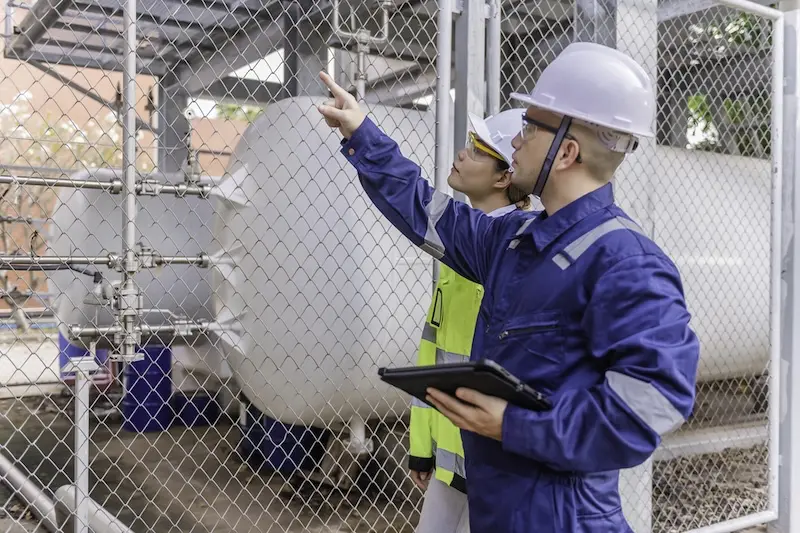
Environmental monitoring challenges across multiple measurement points
Large facilities may need to monitor treatment stages, tanks, discharge points, pumping stations and remote assets.
As the number of measurement points grows, it becomes more difficult to determine:
- Whether each instrument is operating correctly
- Whether calibration is current
- Which alarms require immediate attention
- Whether communication has been interrupted
- Whether records are complete for an audit
- Who is responsible for responding
Without a centralised platform, information may be spread across local displays, spreadsheets and separate control systems.
Cloud-based monitoring can bring live readings, historical trends, alarms, and reporting tools into a single system. This is particularly valuable for multi-site or remote operations.
Environmental monitoring challenges created by manual sampling
Manual sampling remains important, but periodic checks can leave gaps between readings.
A sample only represents conditions at a particular moment. It may miss short-duration events such as:
- Sudden pH changes
- Temporary turbidity increases
- High-flow discharges
- Dosing failures
- Equipment faults
- Rapid changes in ammonia or COD
Continuous monitoring gives facilities a clearer picture of how conditions change over time. It can help identify trends, detect abnormal events and improve response times.
In many applications, continuous measurement and periodic manual validation work together.
Environmental monitoring challenges associated with disconnected data
Environmental data loses value when it cannot be accessed or interpreted easily.
Facilities may have instruments that display readings locally but do not send data to a central platform. Other sites rely on several unrelated systems with different reporting formats.
Disconnected data can lead to:
- Delayed responses
- Time-consuming reporting
- Incomplete historical records
- Duplicate or inconsistent data
- Poor visibility across multiple sites
- Separate calibration and service records
A connected platform can provide live readings, automated alerts, dashboards, reporting tools and historical trend analysis.

Calibration, traceability and data confidence
A measurement is only useful when the facility can trust it.
For regulated operations, teams may need records showing when calibration was completed, what reference was used, whether the instrument passed and what corrective action was taken.
Weak calibration management can result in:
- Instruments operating outside tolerance
- Missing or expired certificates
- Uncertainty during audits
- Inconsistent procedures
- Difficulty proving measurement accuracy
A structured programme should define the instrument register, calibration frequency, acceptance criteria, documentation requirements and follow-up responsibilities.
Traceability is particularly important where monitoring data supports EPA reporting, discharge compliance or audit evidence.
Alarm fatigue and poor alert thresholds
Automated alarms improve response times only when they are configured properly.
Too many nuisance alarms can overwhelm operators. Thresholds that are too broad may allow a significant deviation to develop before anyone is notified.
Alarm management should distinguish between:
- Early warnings
- Operational deviations
- Maintenance alerts
- Communication failures
- Compliance risks
- Critical conditions
Each alarm should have a clear owner and response procedure. Historical alarm data should also be reviewed to identify unstable processes, unsuitable thresholds or recurring instrument problems.
Maintaining monitoring performance over time
Environmental compliance is ongoing. Monitoring systems require continued attention after installation.
Process conditions change. Instruments age. New monitoring points may be added. Reporting requirements can also evolve.
Long-term support should include:
- Preventative maintenance
- Scheduled calibration
- Sensor cleaning and servicing
- Replacement parts and consumables
- Alarm reviews
- Communications support
- Staff training
- System expansion
- Obsolescence planning
Service-level agreements can help facilities maintain consistent performance and reduce the risk of unnoticed failures.
How to reduce environmental monitoring challenges
A successful monitoring programme should begin with the measurement requirement, not the instrument catalogue.
Facilities should define:
- What needs to be measured?
- Where should measurements be taken?
- How accurate must the data be?
- How quickly must the team respond?
- How will calibration and maintenance be managed?
- How will data be stored and reported?
- Who will support the system?
An end-to-end approach helps prevent gaps between instrument selection, installation, reporting and long-term maintenance.

Build an environmental monitoring system you can trust with Process Networks
Environmental compliance depends on reliable data. Whether you are reporting to the EPA, monitoring discharge limits or managing water, wastewater and effluent quality, the accuracy and traceability of your measurements directly affect your compliance position and level of risk.
At Process Networks, we provide complete environmental compliance monitoring solutions, including:
- Certified sensors and industrial analysers
- Flow, level and water-quality instrumentation
- pH, turbidity, dissolved oxygen and conductivity monitoring
- TOC, COD, nitrate and ammonia measurement
- On-site calibration and annual certification
- Traceable documentation for audits
- Cloud-based dashboards and historical reporting
- Automated alerts and multi-site monitoring
- Installation, commissioning and integration
- Long-term maintenance and service-level agreements
Our ISO 9001:2015 quality management system supports traceability across design, installation, calibration and ongoing service, and our team is packed with technical experts who understand industrial measurement and environmental monitoring.
Tell us what you need to monitor, and we will help you stay compliant. Speak with our technical team, and we will design a reliable, traceable solution for your process.