


Traceable calibration provides the documented measurement confidence organisations need when environmental data is used for reporting, compliance and audit purposes. Where environmental performance is measured through sensors, analysers, flow meters and other instruments, the reliability of the final report depends on the quality of the measurements behind it.
For regulated organisations, monitoring records can form an important part of environmental compliance reporting. The Environmental Protection Agency (EPA) requires licensed operators to maintain records related to monitoring, sampling, and analytical methods, which support compliance reporting.
A reading on a dashboard or spreadsheet does not, on its own, prove that the instrument was measuring correctly. Organisations also need confidence in how the instrument was assessed, what reference was used and whether that process was properly documented.
That is where traceability matters.
What traceable calibration means in environmental monitoring
Calibration establishes how a measuring instrument performs relative to an appropriate reference. Traceability connects that result through a documented chain back to a recognised reference.
The International Vocabulary of Metrology defines metrological traceability as the property of a measurement result that allows it to be related to a reference through a documented, unbroken chain of calibrations.
In practical terms, traceability helps answer a simple question: Why should this measurement be trusted?
Traceable calibration versus simply checking an instrument
A routine instrument check can be useful, but it is not necessarily the same as a traceable calibration.
An operator may confirm that a sensor appears to respond correctly when placed in a known solution. However, the strength of that evidence depends on the reference used, the documented procedure, the recorded result and the quality controls surrounding the check.
Likewise, adjustment and calibration are not the same thing. An instrument can be adjusted because its reading is incorrect, but changing the instrument does not by itself create a documented traceability chain.
A controlled calibration process records what was tested, what reference was used, the result obtained and whether the instrument was within the required tolerance.
Why traceable calibration records matter
Calibration creates more than a technical result. It creates evidence.
Months later, a compliance officer or engineer may need to establish:
- Which instrument produced a reading
- When it was calibrated
- What reference was used
- Whether it passed the required criteria
- Whether any corrective action was needed
Good records make it possible to reconstruct that measurement history during reporting, audits or investigations.
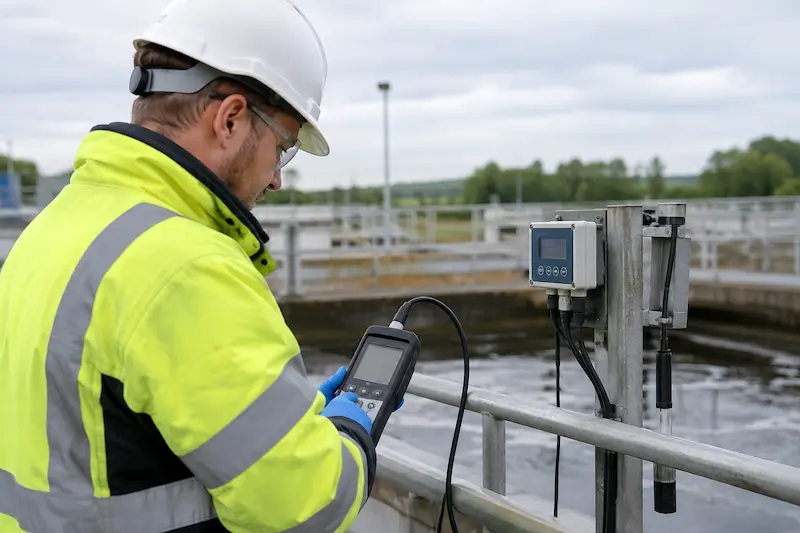
How traceable calibration strengthens environmental reporting
Environmental data often passes through several stages before appearing in a report:
Sensor → transmitter or controller → data logger or PLC → cloud or historian → report
Digital systems make collection and reporting easier, but they cannot correct poor-quality measurement at the source.
If the instrument feeding the system is unreliable, the final report may also be unreliable.
How traceable calibration creates an evidence trail
A structured calibration history helps demonstrate:
- Which instrument generated the data
- Where it was installed
- When it was last calibrated
- Which reference standard was used
- What result was recorded
- Whether the instrument met the required acceptance criteria
This improves data defensibility.
Rather than relying only on the number reported, the organisation can demonstrate the controls that supported the measurement.
Supporting reliable environmental trends
Environmental reporting is rarely based on one isolated reading. Teams often compare performance across weeks, months or reporting periods.
If a measurement changes unexpectedly, the cause might be a genuine process change. It might also be sensor drift, fouling, contamination or another instrument issue.
Calibration history gives teams additional evidence when interpreting those changes.
It helps distinguish between:
- A genuine environmental or process event
- Instrument drift
- Sensor degradation
- A measurement-system problem
That distinction can be important when reported data is being reviewed internally or externally.
How traceable calibration supports compliance reviews and audits
Traceability supports compliance, but it does not replace the specific monitoring and reporting requirements that apply to a site.
Each regulated facility must follow the conditions of its own licence and any relevant EPA guidance. Calibration is one part of the wider measurement-control system that supports those obligations.
What traceable calibration can demonstrate during an audit
Depending on the application, a good calibration record may include:
- Instrument identification
- Calibration date
- Reference standard or solution used
- Recorded test results
- Applicable tolerances
- Instrument condition
- Adjustments or corrective actions
- Calibration status
The exact requirements will vary depending on the instrument, site, quality system and regulatory context.
The important point is that the organisation can provide evidence showing how measurement reliability was controlled.
Why traceable calibration matters when data is challenged
During an audit or investigation, the question may move beyond:
“What did the instrument read?”
A more important question can be:
“How do you know that reading was reliable?”
A documented calibration history makes that question easier to answer.
Where records are incomplete, it can become more difficult to demonstrate measurement confidence, even if the instrument appeared to be working normally.
Where measurement traceability matters most
Traceability is particularly important where measurement data directly influences reporting, environmental decisions or compliance assessments.
Water, wastewater and effluent monitoring
Water and wastewater applications may involve monitoring parameters such as:
- Flow
- pH
- Conductivity
- Turbidity
- Dissolved oxygen
- Nutrients
- Level
- Temperature
Depending on the site and licence, some of these measurements may contribute directly to operational control or environmental reporting.
Where that is the case, confidence in the measuring instrument becomes essential.
Air and emissions monitoring
Similar principles apply to emissions monitoring.
Where automated measuring systems are used, quality assurance and calibration form part of the wider process used to maintain confidence in the data.
Requirements will vary by site, licence and monitoring method, but the underlying principle remains the same: the quality of the environmental report depends partly on the quality of the measurement system behind it.
Remote and multi-site monitoring
Remote monitoring can generate large volumes of data automatically.
That improves visibility, but it also creates another challenge: instruments can continue producing readings even when their performance has changed.
For multi-site or unattended systems, a clear instrument register and calibration status help teams understand which data streams are properly controlled.
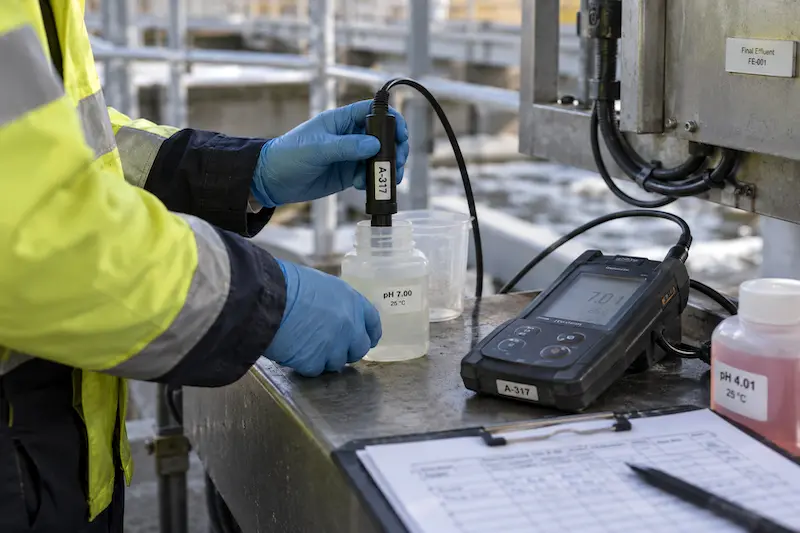
What happens when calibration traceability breaks down?
Poor traceability does not automatically mean that a measurement was wrong.
It means that proving the reliability of that measurement becomes more difficult.
Common weaknesses include:
- Missing calibration certificates
- Instruments without unique asset IDs
- Unclear reference standards
- Incomplete calibration dates
- Adjustments made without documentation
- Instrument changes not reflected in asset records
- Monitoring data stored separately from calibration history
These gaps often become visible during reporting, audit preparation or investigations.
The problem is often data confidence
Imagine an instrument has produced a year of apparently stable data, but its calibration records cannot be found.
That does not prove the data is inaccurate.
However, the organisation has lost an important piece of evidence that could have supported confidence in those measurements.
This is why traceability is not just about producing certificates. It is about maintaining a defensible link between a measurement result and the controls behind it.
Building traceable calibration into the reporting cycle
The strongest approach is to treat calibration as part of the measurement lifecycle rather than as an isolated maintenance task.
Maintain a complete instrument register
A useful instrument register should include:
- Unique asset ID
- Instrument type
- Parameter measured
- Installation location
- Compliance relevance
- Last calibration date
- Calibration status
- Supporting documentation
This helps organisations quickly identify which instruments are critical to environmental reporting.
Set calibration intervals based on risk and requirements
There is no single calibration interval that is suitable for every instrument.
Frequency may depend on:
- Licence or regulatory requirements
- Manufacturer recommendations
- Instrument stability
- Measurement criticality
- Operating conditions
- Historical calibration results
- Internal quality procedures
A high-risk measurement used directly for compliance reporting may need a different level of control from a non-critical process indicator.
Keep calibration and environmental data connected
Ideally, teams should be able to follow a clear path:
Reported result → source data → instrument → calibration status → supporting record
Consistent asset identification makes this much easier.
It can also be useful to record major instrument events, such as calibration, replacement or adjustment, alongside historical trend data.
Review out-of-tolerance results properly
If an instrument is found outside tolerance, restoring the instrument is only part of the task.
The team should also ask:
Could this have affected measurements already recorded or reported?
That review may consider:
- The size of the error
- The previous calibration result
- How long the instrument may have been affected
- Which data was generated during that period
- Whether another measurement source is available
- Whether corrective action is needed
Historical calibration records make this assessment far easier.
A practical traceability checklist
Environmental and engineering teams should be able to answer the following questions:
- Do we know which instruments support environmental reporting?
- Can every instrument be linked to a unique asset ID?
- Can we see its current calibration status?
- Can we identify the reference used?
- Can we find the calibration certificate quickly?
- Are results and tolerances documented?
- Do we have a process for out-of-tolerance findings?
- Can historical monitoring data be linked to the instrument that produced it?
- Are calibration intervals reviewed appropriately?
- Could we explain the measurement chain during an audit?
If several answers are unclear, the issue may not be the monitoring equipment itself, but how measurement traceability is being managed.

How Process Networks supports traceable calibration
Environmental reporting starts with reliable measurement, and confidence is stronger when calibration is documented, traceable and properly managed.
At Process Networks, we offer Calibration & Maintenance services that support industrial and environmental instrumentation through traceable calibration, verification, servicing and documentation. This service helps organisations maintain confidence in instruments used for operational and environmental monitoring.
We provide calibration and maintenance for sensors, analysers and industrial instrumentation, with on-site and workshop options depending on equipment and application.
If you need greater confidence in the measurements behind your environmental reporting, get in touch with our experienced team to discuss your calibration and maintenance requirements with our technical team.